Ramo de Rosas Espadin Capon Mezcal (700 ml)
Our espadín capón is made from an espadín agave planted 9 years ago in Santiago Matatlán, harvested using our famous “Capón” method.
When the agave reaches maturity (after 8 years in the case of this espadín), we cut the quiote (the flower stalk) and leave it in the ground for another year.
This process allows the sugars and minerals from the soil, instead of going up to the flower, to concentrate in the pineapple, which generates a much more subtle and complex distillate than a traditional mezcal.
The agave is then cooked at a low temperature for 5 to 6 days, fermented for 8 days in wooden barrels and distilled twice in copper stills. This very slow process generates a very complex, slightly smoky distillate, with fresh and botanical tasting notes.
Product Information
Product Information
Shipping & Returns
Shipping & Returns
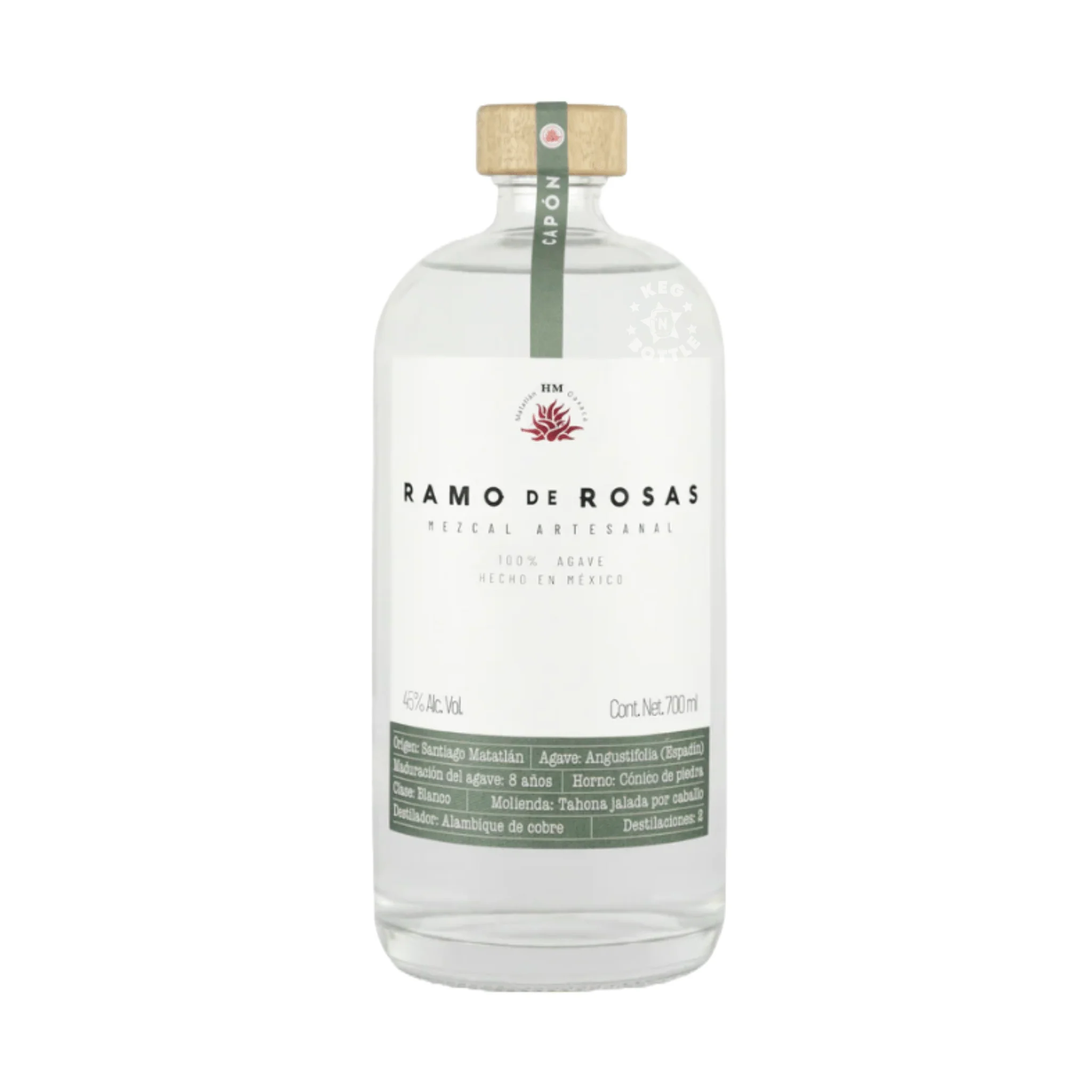
Ramo de Rosas Espadin Capon Mezcal (700 ml)
Ramo de Rosas Espadin Capon Mezcal (700 ml)
Our espadín capón is made from an espadín agave planted 9 years ago in Santiago Matatlán, harvested using our famous “Capón” method.
When the agave reaches maturity (after 8 years in the case of this espadín), we cut the quiote (the flower stalk) and leave it in the ground for another year.
This process allows the sugars and minerals from the soil, instead of going up to the flower, to concentrate in the pineapple, which generates a much more subtle and complex distillate than a traditional mezcal.
The agave is then cooked at a low temperature for 5 to 6 days, fermented for 8 days in wooden barrels and distilled twice in copper stills. This very slow process generates a very complex, slightly smoky distillate, with fresh and botanical tasting notes.
Original: $79.99
-65%$79.99
$28.00Product Information
Product Information
Shipping & Returns
Shipping & Returns
Description
Our espadín capón is made from an espadín agave planted 9 years ago in Santiago Matatlán, harvested using our famous “Capón” method.
When the agave reaches maturity (after 8 years in the case of this espadín), we cut the quiote (the flower stalk) and leave it in the ground for another year.
This process allows the sugars and minerals from the soil, instead of going up to the flower, to concentrate in the pineapple, which generates a much more subtle and complex distillate than a traditional mezcal.
The agave is then cooked at a low temperature for 5 to 6 days, fermented for 8 days in wooden barrels and distilled twice in copper stills. This very slow process generates a very complex, slightly smoky distillate, with fresh and botanical tasting notes.